
Our Journey
This page features our thoughts and experiences with the journey that we had.
Guerrero, Sabina Rizelle
Leader
“Idea Duels not only challenged the people who play it but also challenged the people who made it. Not only is it a game but it was a journey and an experience to create something that hopefully can benefit many in the future for something far greater than our expectations.”
Members
Belleza, Joshua Dominic
Website & Card Designer
IdeaDuels has come such a long way– from anime-esque design for the cards, which we then completely overhauled to a Cards Against Humanity- like game. Frankly, as one of the designers for the anime design and now, the sole designer for the website, I’m just glad it’s finished. The easiest part and simultaneously, the hardest, was taking the role of making this website AND the role of making the designs of the cards, it was hard and challenging, but at the end of the day, I learned sooo many things. From making a website on WordPress (locally on my PC) to then exporting it to CloudFlare so that it can be viewed by anyone, that whole process was so tedious and tiring BUT the sheer amount of knowledge I’ve gained because of this, I consider that a reward of it’s own. Although it was hard and difficult at the beginning, if I was given a chance, I would do it all over again.
Calderon, Jose Antonio
Questions Maker
When our group first came up with the idea for IdeaDuels, a political ideology-themed card game, I thought, “This is going to be really fun! It’s also unique and something they’ll enjoy.”, and in many ways, it was. But I quickly learned that turning an idea into something real, something functional, meaningful, and educational, was going to take a lot more than enthusiasm. It took collaboration, frustration, creativity, and a whole lot of trial and error.
The easiest part of the Capstone journey was brainstorming. Our group thrived during the early conceptual stage, bouncing off ideas about the gameplay mechanics, card designs, and how to make politics more accessible and engaging for people our age without losing the educational aspect of it all. We were passionate and curious, and the energy was high. Coming up with the ideologies and card types like “Easy,” “Medium,” and “Hard” felt natural. It was like we were building our own little world that was to be unveiled at some point.
Of course, we met our fair share of challenges. The hardest part was making sure the game was not only accurate but also balanced and playable. We realized that politics is a complex, often nuanced subject, and boiling it down into digestible game cards without oversimplifying or misrepresenting the ideologies we used was a delicate task. Add to that the need to test gameplay, edit cards according to the suggestions of our practitioners, and deal with printing logistics, and we were suddenly juggling more than we expected.
Despite the stress and occasional setbacks, I’ve gained so much from the Capstone experience. First and foremost, I developed a deeper understanding of how collaboration really works. Our group had different strengths, some were better at research, others at design, others at public speaking, some were good at both, and we had to learn how to play to each other’s strengths, just like in the game itself. I also gained confidence in presenting our work. During our various data gathering sessions, I felt proud seeing how people engaged with our game, laughed at some of the wild matchups with the game cards, and ended with many of them declaring that they had fun and would be willing to come back for some more. Our actual Capstone Defence went better than anticipated, with the panelists commending us for the uniqueness of our card game and engaging with IdeaDuels.
Feedback from the presentation was both helpful and humbling. Some of the suggestions took us aback, like removing the picture-based Hard cards, which I had spent time creating with my good friend Robbie. But I also realized those cards, though visually interesting, made the game uneven for people who had zero context of what to do. Another major suggestion was to make a Filipino version of the game, which made so much sense. Why shouldn’t we translate the game to Filipino if our goal was to educate the youth, even the ones who predominantly speak Filipino? It was a blind spot, and now it feels like an exciting next step. If we could go back and improve IdeaDuels, we’d localize the game better and focus on improving the guide to make it more classroom-friendly.
To the future Grade 12 students about to begin their own Capstone journeys: embrace the mess. It won’t be perfect, and that’s okay. Stay curious, listen to feedback, and most of all, choose a topic you care about, because that passion will carry you through the all-nighters, the late-night group debates, and the nerves of the long-dreaded defence. Don’t aim to create the perfect product. Aim to grow from the process.
IdeaDuels started as a card game, but for me, it has became something more, my final hurrah before I leave the school for good and a reminder of what it means to create something that informs, inspires, and invites others to think deeper.
Parungao, Enzo Delangelo
PPT Designer & Assistant Designer
The capstone project was not easy to say the least. It was a project of hardwork and frustration where me and my group went through a lot of ups and downs. The hardest challenge we faced as a group I would say was thinking of an idea to make our card game unique, fun to play, and educational. The cards and game mechanics went through a lot of changes throughout the months and in the end after all the frustration, we were able to fulfill the goal of making a fun and educational card game. Watching our card game getting played and enjoyed by our participants was certainly rewarding as it showed that our group’s hard work was all worth it. Over the course of the capstone project I learned how to take initiative even just a little bit which I plan to keep working on. Throughout my life I’ve had trouble taking initiative and now I learned it a bit through the help of capstone and my groupmates. I think that the suggestions given by the panelists and our capstone adviser were really helpful. An example would be making the game in Tagalog and not just in English, this is to be able to cater even to people who want to play the game but can understand Filipino better than English. Another suggest would be making some cards have descriptions and not just a picture to interpret, this to make the scenario card easier to understand. Overall, every suggestion given to us was very helpful in improving the game and we will certainly apply some suggestions in the future. For those capstone groups after us I only have one advice and that would be to work together through thick and thin, stick with one another and work as hard as they can because in the end after the capstone presentation, it will all be worth it.
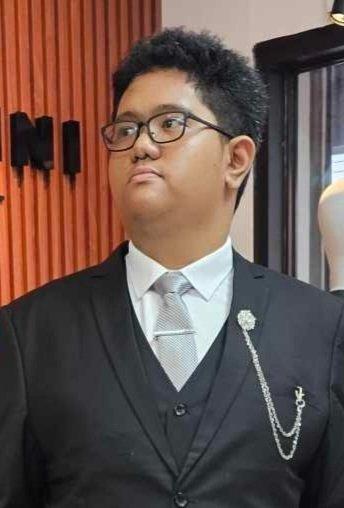
Riva, Ronaldo Benedict
Lead Researcher
Prior to making a Capstone project, I was afraid of what would happen here, I knew it would be a major factor of my life here in Senior High School, a thesis project that will affect my academic life. Now, as the final defense finishes, I get to reflect on the moments that happened not just in Capstone, but even in III and PR. During my two years of making this project, the journey with my group wasn’t the smoothest despite what it seemed on the outside. I would say the hardest parts of this project weren’t the RRLs we just couldn’t find due to its niche nature or the results of our data which seemed ineffective. Rather, the non-academic struggles our group faced, both internal and external, strained our morality, but we resisted to the very end, and when it happens, that’s when the easy part comes. Once our group finally gets it together, the tasks become lighter and the light at the end of the tunnel suddenly becomes brighter.
After doing this Capstone Project, there are many things that I have learned, mainly due to past mistakes that end up biting me hard later on. The main thing I learned was to always see what is missing, to view it in different angles, and maybe it’s where you can find the answers you need. This has helped me from time to time since 1st trimester this school year. Another thing that I learned was to keep fighting, even if beaten to a pulp, recently, I have started watching Hajime no Ippo, and to put it simply, we must all become like its protagonist Ippo Makunouchi, in a sense that we must keep getting up in the name of our hopes and dreams. The group has experienced its own struggles, but we managed to get up and fight on against the papers all the way to the final defense. Speaking of defenses, one thing we really learned in regards to our product is the amount of creativity and content we can use on it, to produce different versions, especially one where it can be understood more by our fellow youth, whether it would be making the language Filipino or to add more Philippine current and historical events.
One final thing, to all having their Capstone, or even their PR1, fearing what will happen, I leave with a simple phrase, one said to the Holy Mother Mary by the Angel Gabriel, “Do not be afraid”.